From a protest in Dhaka to a monument in Cardiff Bay
The monument's story begins in 1952, in what was then East Pakistan and is now Bangladesh — and it belongs, today, to every language community in Cardiff.
A public monument in Cardiff Bay honouring every mother tongue, and the students who gave their lives for the right to speak theirs. Open to all, always.
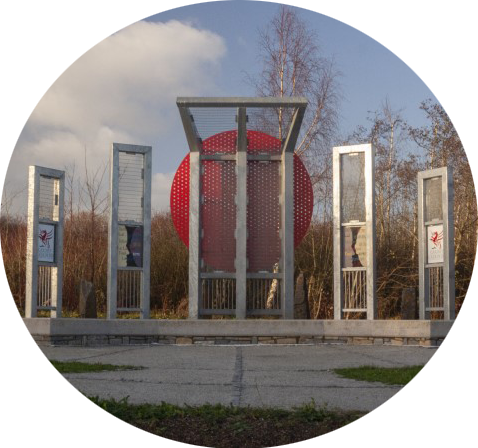
The International Mother Language Monument stands as a symbol of respect and tolerance for all cultures — a reminder that every mother tongue carries equal worth and dignity. In a world drawing ever closer together, it acts as a quiet beacon for linguistic diversity and multilingual education.
The monument gives permanent, physical form to the spirit of International Mother Language Day, held each year on 21 February as designated by UNESCO, and serves as Cardiff's gathering point for that day's commemoration.
It stands in Grangemoor Park, a green, open space by Cardiff Bay — freely accessible to residents, visitors and anyone wishing to reflect on the languages that shape who we are.
The monument's story begins in 1952, in what was then East Pakistan and is now Bangladesh — and it belongs, today, to every language community in Cardiff.
Each year on 21 February, Cardiff's Bangladeshi community and friends from across the city gather at the monument to mark International Mother Language Day — reading, remembrance, flowers laid at the pillars, and conversation about the languages spoken at home.
Every mother tongue lost is a way of seeing the world lost with it. The monument asks visitors to pause and consider the language closest to their own heart.
The monument is supported by patrons who share its commitment to linguistic diversity and community heritage in Cardiff.
The monument exists because of the generosity of the individuals and organisations below, who gave their time, money and support to see it built and maintained.
Including individuals, community organisations, and the schools, colleges and universities that have supported IMLM.